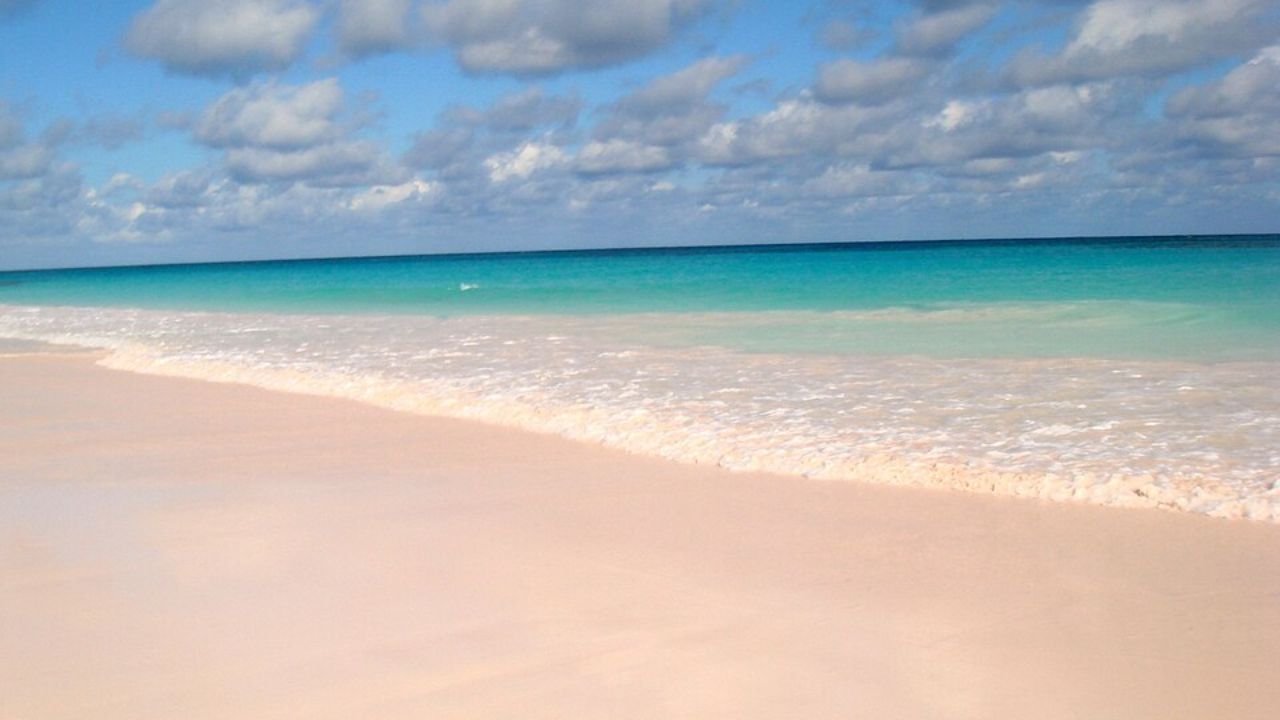
The short answer? Tiny dead organisms.
Not dye. Not minerals. Not some trick of the light. The pink sand beach on Harbor Island Bahamas owes its blush to crushed shells of microscopic creatures called foraminifera. They live on nearby reefs. They die. Waves grind their bright red and pink shells into fragments. Those fragments wash ashore and mix with white coral sand. The result is three miles of soft, rosy shoreline on the east coast of Harbour Island.
That’s the quick version. But the full story is way more interesting.
The Real Science Behind the Color
Here’s the thing most travel blogs skip over. They say “tiny organisms” and move on. But the science behind this beach is surprisingly specific.
The species responsible is called Homotrema rubrum. These are single-celled marine organisms. Not insects, not coral, not algae. They belong to a group called Benthic Foraminifera. And they’re everywhere in the tropical oceans. But what makes them special here is the sheer number of them living on the reefs around Harbour Island.
Each one builds a hard shell (called a “test”) that ranges from bright red to deep pink. The shell has tiny holes. The organism uses those holes to extend small feet-like structures called pseudopodia. It uses them to grip onto coral and feed.
When the organism dies, the shell stays behind. Atlantic waves do the rest.
Here’s the process broken down:
- Foraminifera grow on the underside of reefs near Harbour Island
- They die naturally after completing their life cycle
- Ocean waves break their shells into fine fragments
- Currents carry those fragments toward shore
- The pink shell bits mix with white calcium carbonate sand and crushed coral
- Over time, this creates a consistent blush tone across the entire beach
It’s basically a natural pink sand factory running 24/7 offshore.
Why Devil’s Backbone Reef Matters So Much
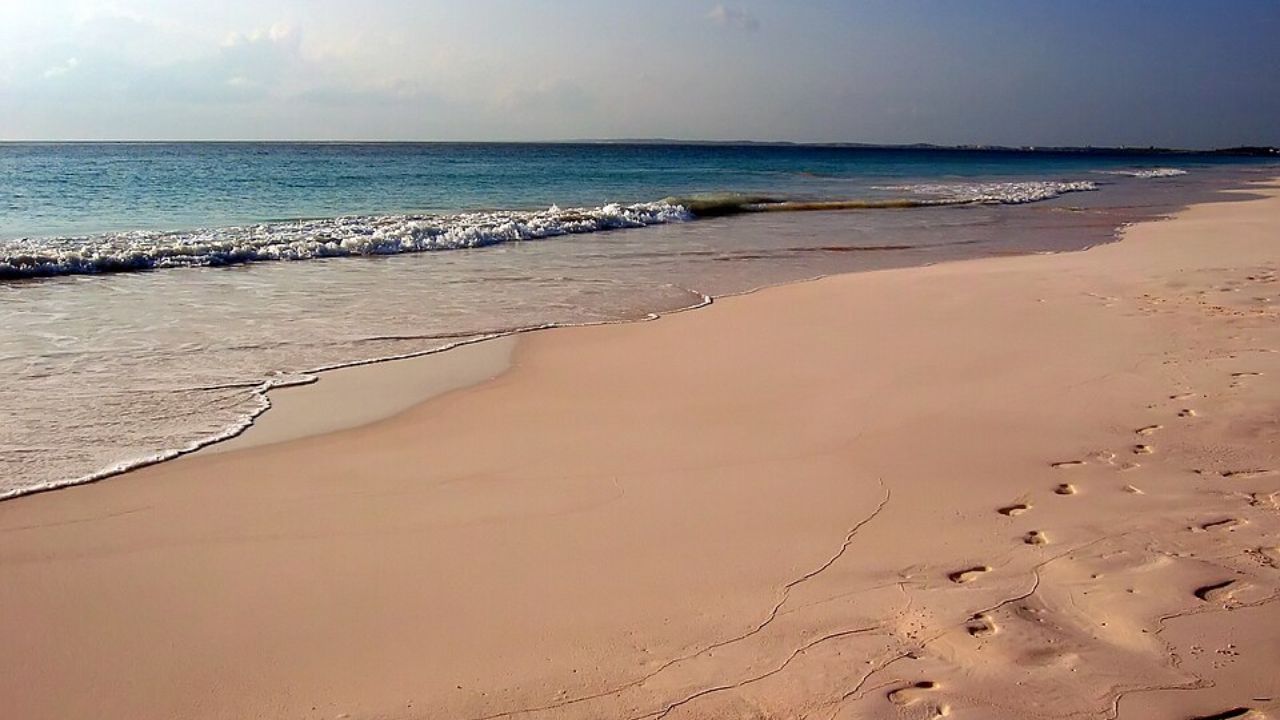
Not all reefs produce this effect. The pink sand beach Harbor Island Bahamas sits right next to Devil’s Backbone. It’s a shallow, jagged coral reef system that runs along the north side of the island. And it’s one of the most prolific foraminifera habitats in the Caribbean.
Devil’s Backbone has a wild reputation. It’s ripped the bottoms off more ships than any other reef in the Bahamas. But that same rough, shallow structure creates perfect conditions for Homotrema rubrum to thrive.
The foraminifera cling to the underside of coral ledges. They grow in caves and on the sea floor. And because the reef is so close to shore, the wave action doesn’t have to carry fragments very far. They land right on the beach.
Take away this reef, and the beach loses its color. Simple as that. Which is exactly why reef protection around Harbour Island matters so much. A healthy reef means pink sand. A damaged reef means a regular white beach.
It’s Not Always “Barbie Pink”
Let’s set expectations. People see photos online and expect hot pink. That’s not what this beach looks like.
The color is more of a soft blush. A pale rose. Sometimes almost peach. And it changes throughout the day based on light, moisture, and where on the beach someone is standing.
When the pink shows most:
Condition | Color Intensity |
Wet sand at the waterline | Most vivid pink |
Sunrise (6:30 to 7:30 AM) | Deep rose, almost coral |
Sunset (5:30 to 6:30 PM) | Warm pink with hints of purple |
After rainfall | Noticeably stronger blush |
Dry sand at midday | Subtle, almost white with a hint |
Overcast skies | Soft pastel tones |
The pink stands out strongest where waves meet sand. That wet strip along the water’s edge is where the foraminifera fragments concentrate. Scoop up a handful there, and the tiny pink bits are visible between the white grains.
And here’s a detail most guides skip. At sunrise, the beach glows a deep rose. By mid-morning, it softens. At sunset, the sand can look almost purple. The color literally shifts hour by hour. So the “best” version of this beach depends on what time someone shows up.
The Sand Stays Cool (Which Is Weird)
Most tropical beaches get scorching hot by noon. Walking barefoot becomes a sprint to the nearest towel. But not here.
The sand on the pink sand beach Harbor Island Bahamas stays cool throughout the day. And the reason ties right back to its composition. Standard beach sand is silica quartz. It absorbs heat. This beach is made of limestone, coral fragments, and foraminifera shells. That mix reflects sunlight instead of absorbing it.
So barefoot walks at 2 PM? Totally fine. No hopping. No burning. Just cool, soft sand. It’s one of those small details that makes a big difference when spending a full day on the beach.
How It Compares to Other Pink Beaches
Only about seven beaches worldwide have consistent natural pink coloring from foraminifera. And Harbour Island’s three-mile stretch is the longest.
Beach | Location | Length | Pink Source |
Pink Sand Beach | Harbour Island, Bahamas | 3 miles | Foraminifera (Homotrema rubrum) |
Horseshoe Bay | Bermuda | 0.25 miles | Foraminifera (Homotrema rubrum) |
Elafonisi Beach | Crete, Greece | 0.6 miles | Red organisms on dead coral |
Pink Beach | Komodo Island, Indonesia | 0.3 miles | Red coral fragments |
Harbour Island wins on length. It’s not even close. And because the nearby reef system is so productive, the color is consistent across the full stretch. Other pink beaches tend to show the tint in patches or small sections.
Best Time to Visit
The weather on Harbour Island is warm year-round. But some months are better than others for seeing the pink and avoiding crowds.
- November through May is peak season with the driest weather and calmest seas
- April and May offer warm days, fewer crowds, and lower prices
- June through October brings more rain and occasional storms, but also better deals on places to stay
- Sunrise and sunset hours are non-negotiable for seeing the best color
For photos specifically? Show up an hour after sunrise. The soft light at that angle pulls the pink right out of the sand. Late afternoon works too. Midday sun washes the color out.
Getting to Harbour Island from Miami
Harbour Island sits just off the northeast tip of Eleuthera in the Bahamas. It’s a small island. Only about 3.5 miles long. And it’s one of those places that feels way more remote than it actually is.
From Miami, the trip typically involves a flight to North Eleuthera Airport followed by a short water taxi ride across the harbor. The whole transfer takes about 20 minutes from the airport. For people looking to skip the layovers and commercial terminals, seaplane flights from South Florida offer a more direct route. The Eleuthera Day Trip from Miami covers the flight and a full boat tour of the surrounding islands, which makes it one of the easiest ways to reach this stretch of coastline. The aerial views over the Bahamas chain alone make that option worth considering.
Once on the island, getting to the beach is easy. Harbour Island is small enough to get around by golf cart. Most visitors rent one for the duration of their stay. The beach runs along the entire east side, so it’s hard to miss.
Why This Matters for Anyone Planning a Bahamas Trip
The pink sand beach on Harbor Island, Bahamas, is one of those rare natural spots that lives up to its reputation. Harbour Island also ranks among the best islands in the Bahamas for beaches and views, sitting alongside spots like Staniel Cay and the Berry Islands. But it lives up to it differently than most people expect. The color is subtle. It shifts with the light. And the real magic is understanding why it looks the way it does.
Knowing that millions of microscopic organisms built this beach over centuries makes standing on it different. It’s not just pretty sand. It’s a functioning marine ecosystem producing visible results on shore.
And honestly? That makes it more impressive, not less.
FAQs
Is the pink sand beach Harbor Island Bahamas really pink?
Yes, but it’s a soft blush rather than bright pink. The color comes from crushed shells of foraminifera, tiny marine organisms with red and pink shells. The pink shows most in wet sand along the waterline, especially during sunrise and sunset when angled light brings out the full tone.
What time of day does the pink sand look most vibrant?
Sunrise and sunset are the best times to see the strongest pink color. Early morning light (around 6:30 to 7:30 AM) creates a deep rose tone, while sunset adds warmer hues that can even look purple. Midday sun tends to wash out the color and make it appear more white.
Can the pink sand disappear over time?
The color depends on healthy reef systems nearby, especially Devil’s Backbone reef. As long as the reef supports foraminifera populations, the beach will keep its pink tint. Reef damage from pollution or overdevelopment could reduce the sand’s color over time, which is why conservation efforts around Harbour Island are critical.
How do visitors get to Pink Sand Beach from the US?
Most travelers fly into North Eleuthera Airport from Nassau, Miami, or Fort Lauderdale, then take a 10 to 15 minute water taxi to Harbour Island. Seaplane charters from South Florida offer a more scenic and direct option. Once on the island, the beach stretches along the entire eastern coast and is easy to reach by golf cart.
Bimini Bahamas Island Charter